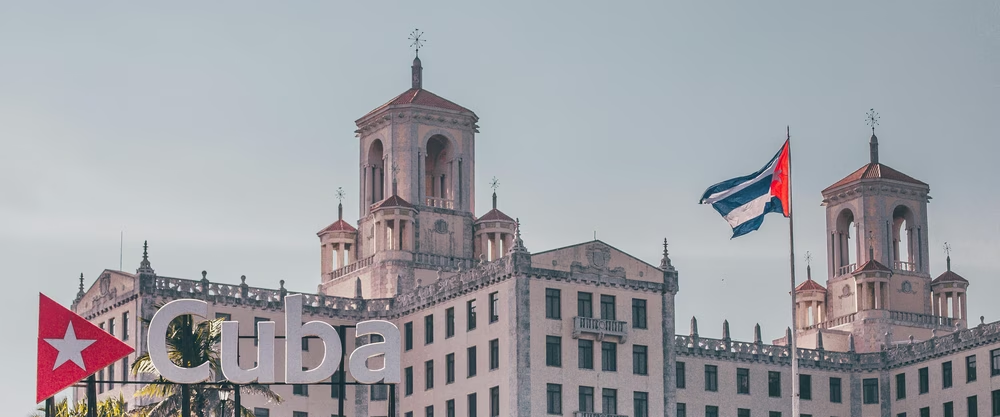
Top 5 student cities in Cuba
Discover the favourite cities for university students in Cuba and what makes them unique
Choosing among the top five student cities in Cuba requires understanding how the country's university system works and what options are actually available to international students. Unlike other destinations in Latin America, academic offerings in Cuba are highly centralised. Havana is the main point of reference, both for its variety of universities and its infrastructure and services for foreign students.
Even so, other cities in the country have nationally renowned universities and an active student life, mainly geared towards local students. In this article, we review Cuba's main university cities, analysing the pros and cons of studying in each one, the most prominent universities and rental options for students, with the aim of helping you find the destination that best suits your academic and personal profile.
|
City
|
Top universities | Why Choose This Option? | Student Vibe |
|---|---|---|---|
|
Havana
|
Universidad de La Habana | Historic universities, cultural capital, and country-wide connectivity | Bohemian, with a strong street life, art, and political debates |
|
Santiago de Cuba
|
Universidad de Oriente | Cradle of music, affordable cost, and Caribbean vibe | Joyful and traditional |
|
Santa Clara
|
Universidad Central “Marta Abreu” de Las Villas | City rich in history, geographical center, and scientific hub | Pure university atmosphere, cultural clubs, and alternative rock |
|
Camagüey
|
Universidad de Camagüey Ignacio Agramonte Loynaz | Unique colonial layout, low cost, and dance tradition | Strong sense of community and a relaxed pace |
|
Holguín
|
Universidad de Holguín | Parks and proximity to beaches | Welcoming, with plenty of outdoor activities |
Havana

Havana is Cuba's main academic destination and, in practice, the only city in the country with a compelling offer for international students. In addition to being home to the most renowned universities, it has the best infrastructure, services and accommodation options tailored to those arriving from abroad, making it the usual point of entry for studying in Cuba.
Pros and cons of studying in Havana
The academic experience in Havana has many advantages, but certain disadvantages could influence your stay.
Pros of studying in Havana
- Greater range of universities and programmes for international students.
- More developed infrastructure compared to the rest of the country.
- Extensive cultural, social and student life.
- More accommodation options for students and better basic services.
Cons of studying in Havana
- Higher demand for accommodation compared to other cities.
- Slightly higher cost of living within the Cuban context.
- More intense urban rhythm than in smaller university towns.
Top Universities in Havana
Havana is home to some of Cuba's most important academic institutions.
Universidad de La Habana (University of Havana)
It’s considered the most prestigious university in the country and one of the oldest in Latin America. The main campus is located in the Vedado neighbourhood, on University Hill. However, it has faculties in other parts of the city.
Find useful information about areas and accommodation in the guide to accommodation near the University of Havana.
Student housing in Havana
Rental accommodation for students in Havana is more varied than in the rest of the country, especially for international students. Options tend to focus on rooms in private homes or residences located in neighbourhoods with good connections to universities.
Although there’s more choice than in other Cuban cities, it’s still advisable to book accommodation in advance.
Looking for accommodation in Cuba? Read our guide to student housing in Havana, with the best neighbourhoods and approximate prices.
Santiago de Cuba
Santiago de Cuba is the second most important city in the country and one of the main university centres nationwide. Its academic profile is clearly geared towards Cuban students, although it may be of interest to those seeking a more local university experience and direct contact with the culture of eastern Cuba.
Pros and cons of studying in Santiago de Cuba
Santiago de Cuba stands out for its benefits for students, but it also has some weaknesses.
Pros of studying in Santiago de Cuba
- Authentic student atmosphere and less crowded.
- Expenses are generally lower than in Havana.
- Strong cultural identity and active social life at the local level.
Cons of studying in Santiago de Cuba
- Very limited range of programmes for international students.
- Less infrastructure and services designed for foreign students.
- More limited accommodation options.
Top Universities in Santiago de Cuba
The most important institution is the University of Oriente, one of the most important universities in the country outside Havana. It excels particularly in areas such as engineering, natural sciences and humanities, and plays a key role in academic education in eastern Cuba.
Student housing in Santiago de Cuba
In Santiago de Cuba, accommodation options for foreign students are more limited than in Havana. Most options are rooms in private homes, with direct agreements between owners and students.
Santa Clara
Santa Clara is a medium-sized university town, known for its strong student presence and for offering an academic experience that is fully integrated into local life. Unlike the capital, its appeal lies not in its international offerings, but in a quieter environment focused mainly on Cuban students.
Pros and cons of studying in Santa Clara
Studying in Santa Clara can be incredible, although there are also some drawbacks to consider.
Pros of studying in Santa Clara
- University atmosphere and active student life.
- A manageable city, with short distances and a more relaxed pace.
- More affordable cost of living compared to Havana.
- Good integration between university and city.
Cons of studying in Santa Clara
- Very limited offer for international students.
- Less diversity of programmes and services compared to the capital.
- More limited leisure options and services.
Top Universities in Santa Clara
The Marta Abreu Central University of Las Villas is one of the most renowned institutions outside Havana. It’s prestigious nationwide and excels in areas such as engineering, social sciences and education, serving as an academic benchmark in the centre of the country.
Student housing in Santa Clara
Rental accommodation for students in Santa Clara is mostly informal and local in nature. Similar to the situation in Santiago de Cuba, options usually consist of rooms in private homes near university areas.
Camagüey
Camagüey is one of the oldest cities in Cuba and has a long academic tradition within the national university system. Its student profile is distinctly regional, designed primarily for Cuban students, and offers a more relaxed and structured academic experience than that found in larger cities.
Pros and cons of studying in Camagüey
Choosing Camagüey to study brings with it great advantages, although certain disadvantages may affect the experience.
Pros of studying in Camagüey
- University with a strong presence in the central-eastern region of the country.
- Less congested urban environment and a slower pace of life.
- It’s more affordable than living in Havana.
- A city with its own historical and cultural identity.
Cons of studying in Camagüey
- Very few international students.
- Less diverse academic offerings compared to larger cities.
- Less availability of services aimed at foreign students.
Top Universities in Camagüey
The Ignacio Agramonte Loynaz University of Camagüey is the city's main academic institution. It’s nationally recognised and specialises in areas such as engineering, educational sciences and economics, making it an educational benchmark in the region.
Student housing in Camagüey
Student accommodation in Camagüey is limited and local in nature, mainly consisting of rooms in private homes. Supply is low and not very standardized, so it’s usually more suitable for students who already have prior contact with the university or local networks.
Holguín
Holguín is a growing university town within the Cuban context, with a more functional than international academic focus. It’s aimed primarily at local students and those seeking a simple university experience away from the country's main urban centres.
Pros and cons of studying in Holguín
Being a student in Holguín has many favourable aspects, but there are also factors that may be less appealing.
Pros of studying in Holguín
- A relatively orderly city that’s easy to get around.
- A stable and well-integrated university presence in the city.
- Affordable cost of living within the Cuban context.
- Suitable environment for those who prioritise tranquillity.
Cons of studying in Holguín
- More limited accommodation options that are poorly suited to foreign profiles.
- Less cultural and student activity than in other university cities.
- Very limited offer for international students.
Top Universities in Holguín
The University of Holguín is the most important academic institution in the city. It offers a wide range of courses at national level, particularly in areas such as education, social sciences and technical sciences, and plays a key role in university education in eastern Cuba.
Student housing in Holguín
Rental accommodation for students in Holguín is basic and geared towards the local market. Rooms in private homes predominate, with limited availability and less flexibility for international students. For this reason, it’s usually a more viable option for Cuban students or those with very specific profiles.
Find accommodation in Cuba with Erasmus Play
Studying in Cuba can be a very unique academic and cultural experience, but it is essential to understand the real differences between its university cities. Havana stands out as the best — and practically the only — option for international students, thanks to its academic offerings, infrastructure, and greater availability of accommodation suited to this profile.
The other cities analysed, such as Santiago de Cuba, Santa Clara, Camagüey and Holguín, play a key role within the national university system and offer a more local experience, designed mainly for Cuban students or those seeking a different academic immersion that is less internationally oriented.
Before choosing a destination, it’s advisable to evaluate not only the university, but also the actual accommodation options and services available in each city. Having clear information and specialised student accommodation platforms makes it easier to make a decision that matches each student's profile and expectations.
Other guides on studying and living in Cuba
In the following guides, you can find more information about this Latin American destination: